
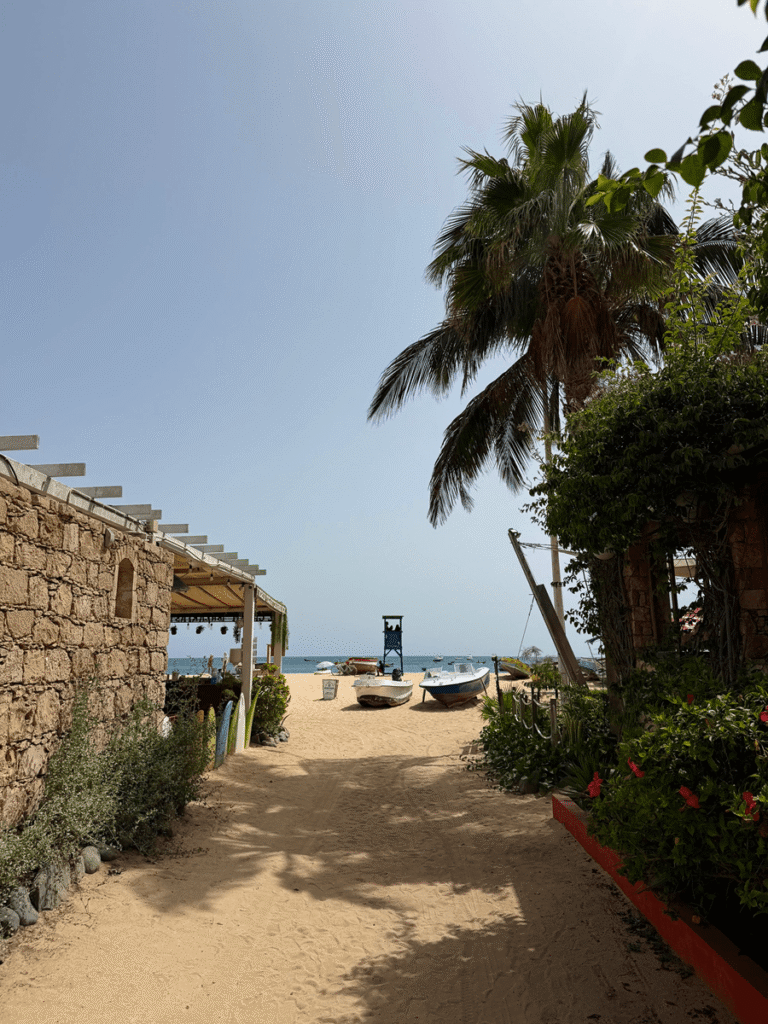
I never expected a tiny, sun-baked island in the middle of the Atlantic to change the way I see my own life. But that’s exactly what Cape Verde (or Cabo Verde, as the country officially calls itself) did to me. This is the story of how a short, cheap flight from Portugal turned into one of the most meaningful trips I’ve ever taken — and why I came home wanting to change everything.
✈️ Plan your Sal trip like I did
Some of these are affiliate links. If you book through them, I earn a small commission at no extra cost to you. Thank you for supporting my content!
To understand why Cape Verde hit me so hard, you need to know a little about where I was before it.
I lived in Europe for five years. And during that time, I traveled a lot. When you live in Europe, everything is close. A new country is often just a one- or two-hour flight away, and if you’re flexible with dates, tickets can cost less than a dinner out. Weekend trips were normal. Spontaneous trips were normal. Discovering a new culture every few weeks was just… life.
Then I moved back to Brazil. I’ve been here for three years now, and I love my home — but my travel life changed completely. From Brazil, almost every international destination is far and expensive. Long-haul flights, high prices and long travel days mean you think twice (or ten times) before booking anything. In three years, I managed only a handful of international trips.
Without really noticing, I had stopped exploring.
This year, I finally went back to Europe for a trip. While I was planning it, I realized something: from Portugal, Cape Verde is just a short flight away — and surprisingly affordable. It had been on my list for years, and suddenly there was no excuse.
So I booked it. I chose Sal, the most popular island for visitors and the easiest to reach.
I had no idea how much I was going to fall in love.
I stayed at the Meliá Dunas Beach Resort & Spa, an all-inclusive resort in Santa Maria, the main beach town in the south of Sal — and I couldn't recommend it more. The quality is excellent for a really good price.
Several à la carte restaurants are included: Mediterranean, seafood, Italian, African and a steakhouse. The food was good, and it's nice to have so much variety. Just make sure you book them in advance.
The resort has a gorgeous beach, several pools and great drinks. It's also super lively, with lots of activities during the day and shows and parties at night. Every day and every night there's a different program, so you never get bored.
Plus, Santa Maria is the best base on the island: it's where the best beaches, restaurants and most tour pickups are.
Sal is a super small island, which turned out to be one of the best things about it. I was able to explore pretty much everything — and still had time to slow down, sit by the ocean and just be there.
Don’t expect lush green jungle. Sal is dry, flat and covered in desert landscapes. Its name literally means “salt” in Portuguese, a nod to the salt flats that once made the island valuable. But that simplicity is exactly what makes it so beautiful. Golden desert meets turquoise water, the sky feels enormous, and everything moves at a calmer pace.
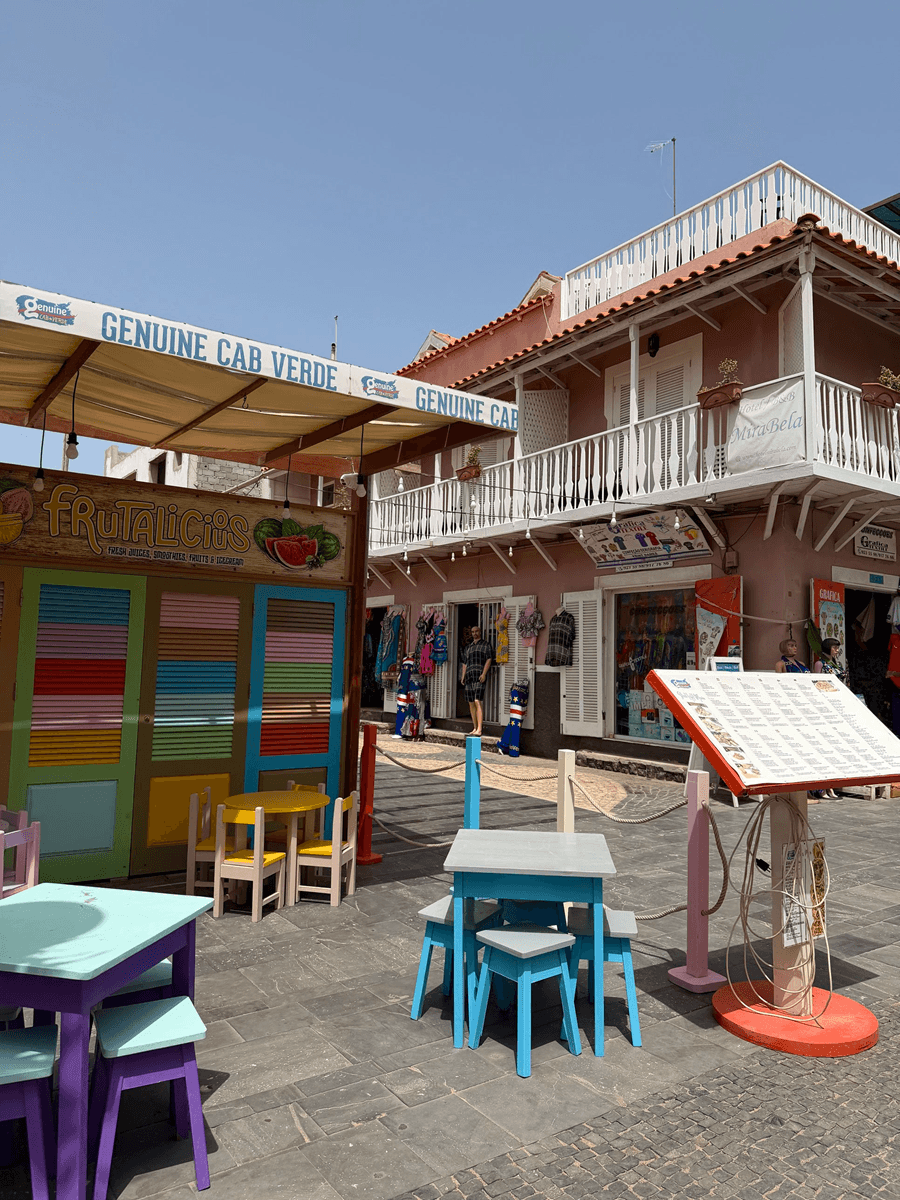
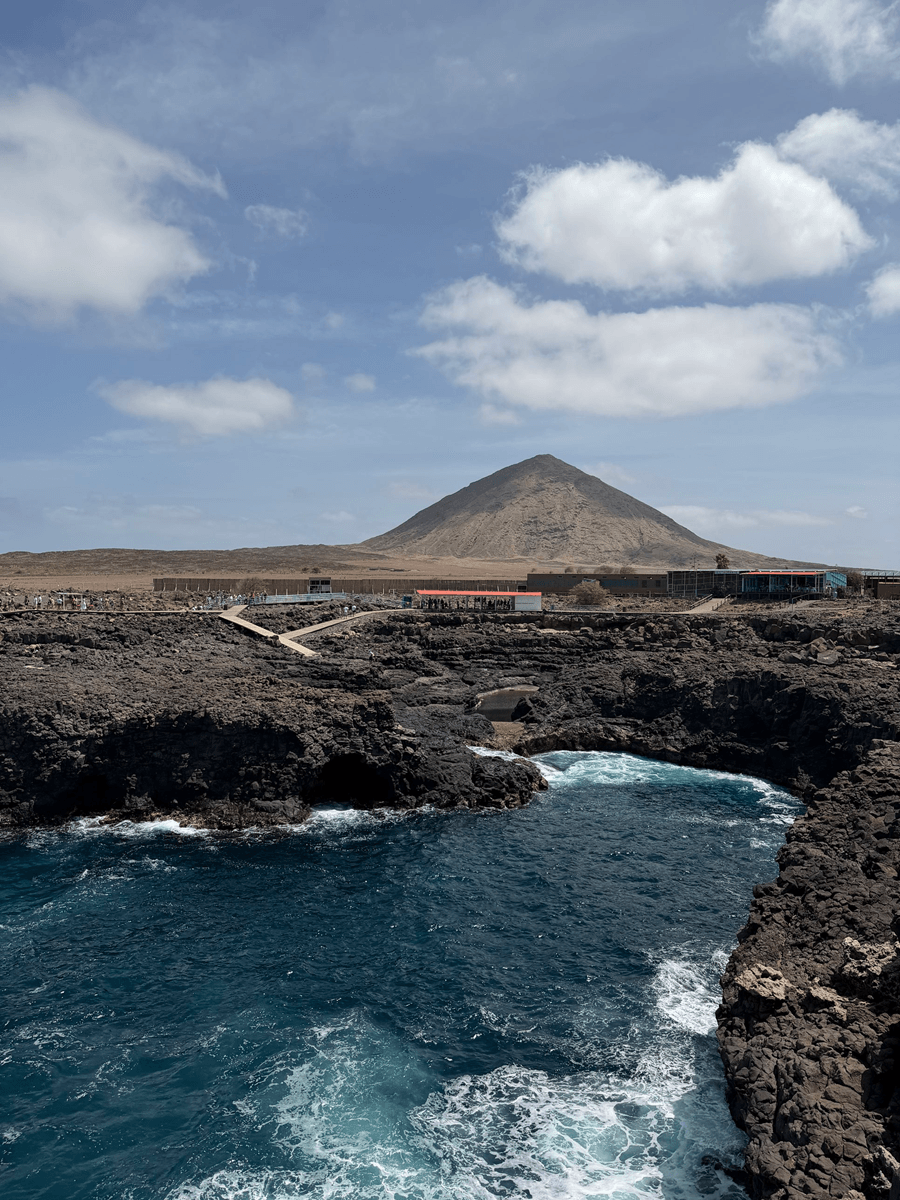
If you only do one tour in Sal, make it this one. In a single day, I got to see the whole island — and every stop was unforgettable:
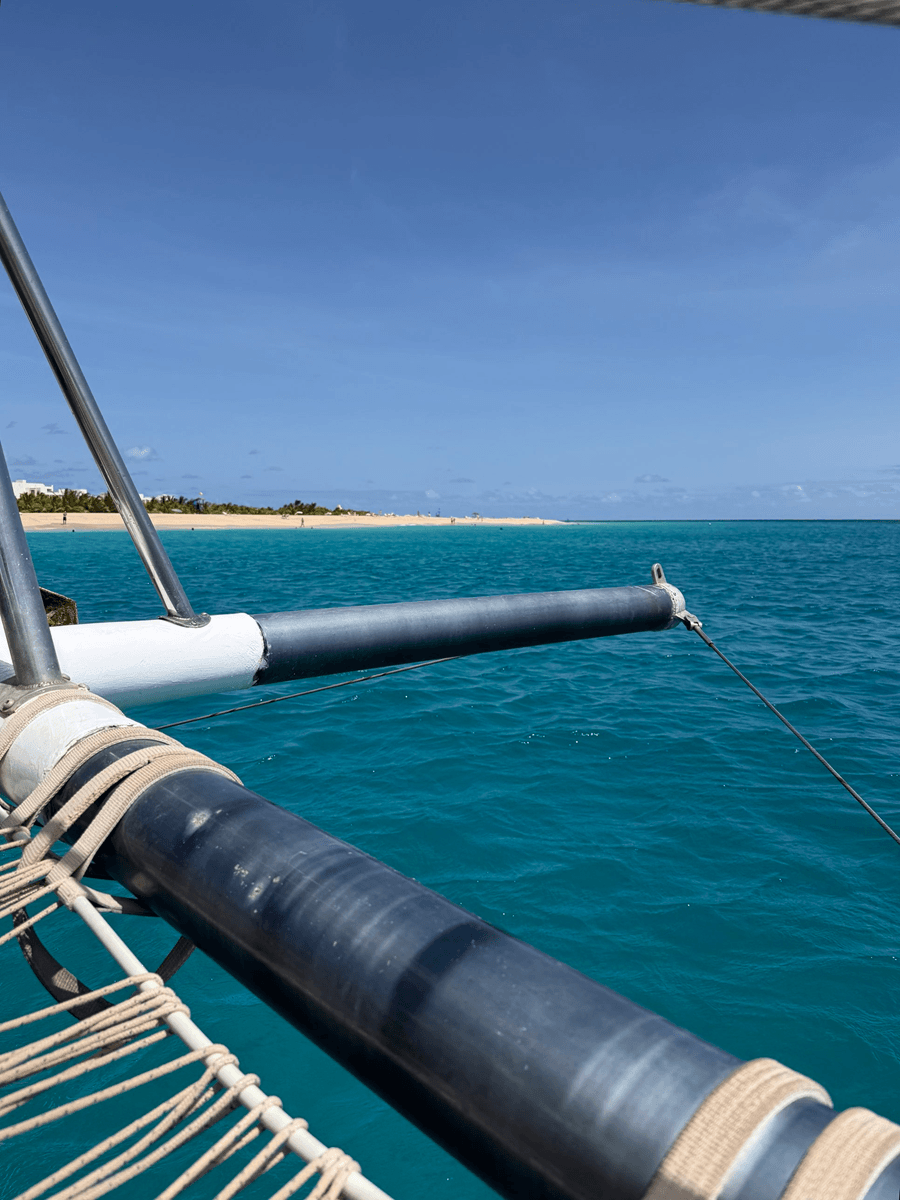
This was one of the most relaxing experiences of my life. For three hours, I just watched the sea go by — in silence, with nothing but the sound of the waves and the ocean breeze. No rush, no noise. Just the Atlantic.
Halfway through, we stopped so we could jump into the water for a dip. Honestly, it was pure peace, and exactly what I didn’t know I needed.
The sea turtle experience was simply sensational. Cape Verde is one of the most important nesting places in the world for loggerhead sea turtles, and seeing them in their natural environment is something I’ll carry with me forever. If you visit during turtle season, don’t miss it.
I’m Brazilian — I’m from Rio. I’m not easily impressed by beaches. But the beaches in Sal are just perfect. Soft sand, crystal-clear turquoise water and that warm, constant sun that Cape Verde has almost all year round. Add the breeze that makes Sal one of the best kitesurfing spots in the world, and you have the kind of beach days you dream about all year.
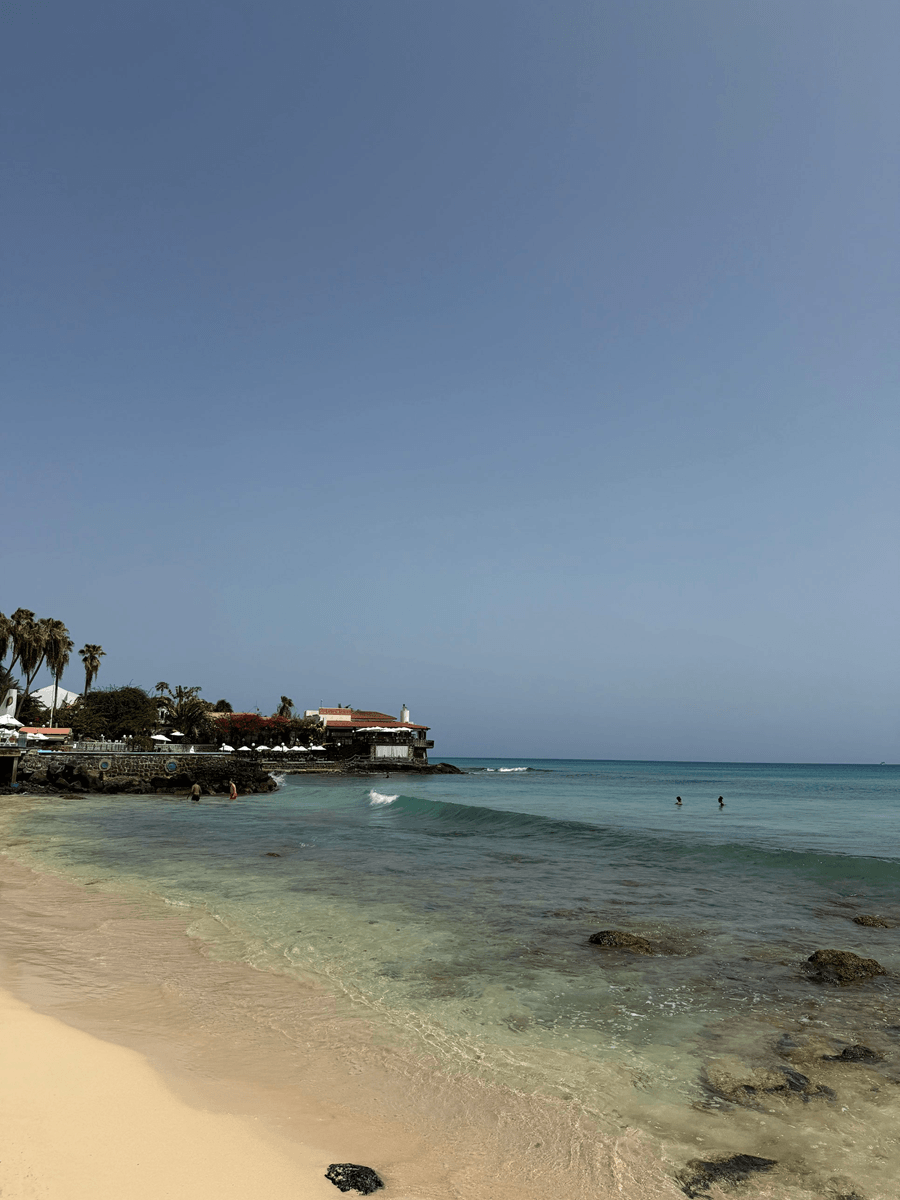
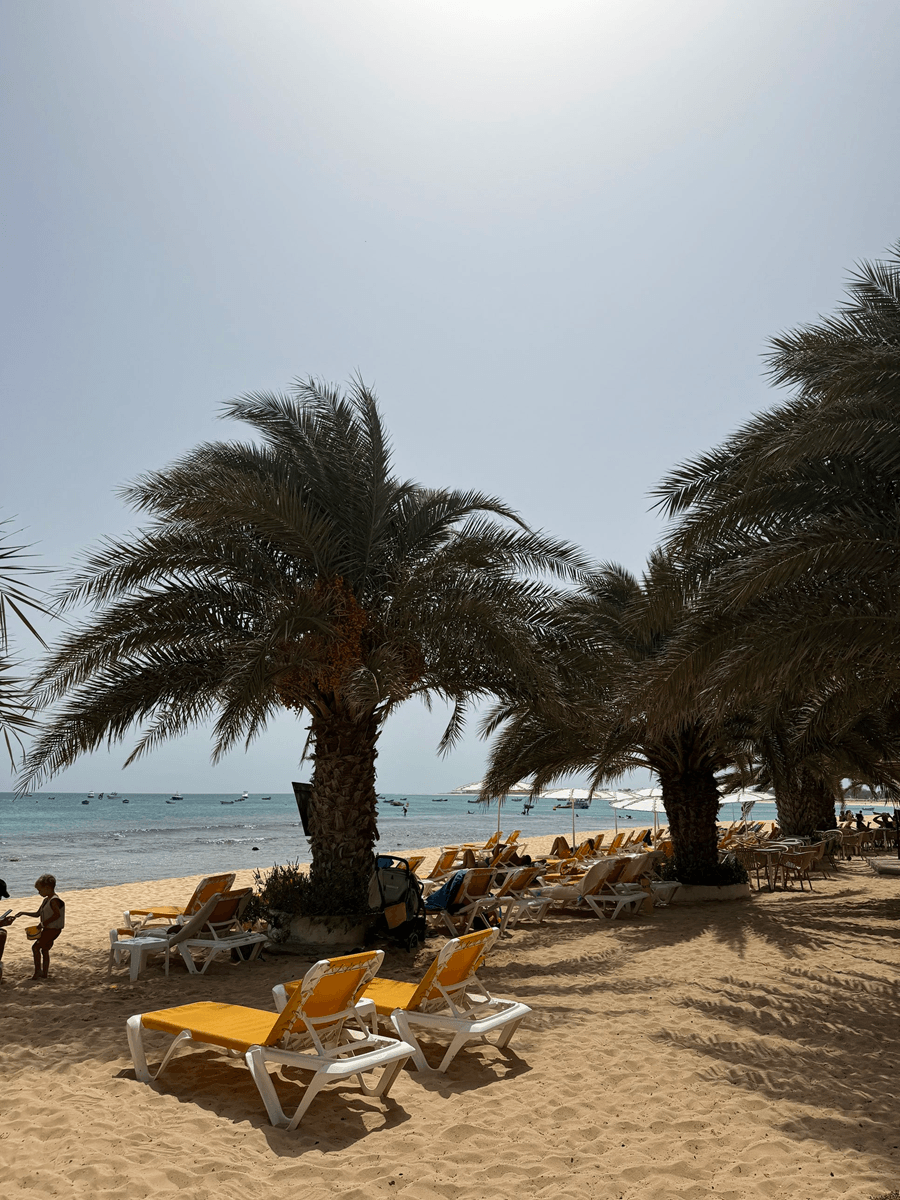
If I had to choose one thing that made me fall in love with Cape Verde, it would be the people.
I met incredible Cape Verdeans during my trip, and I fell in love with the way they live. They’re always dancing, singing, celebrating. There’s a lightness and joy in everyday life that is contagious. People are incredibly friendly and welcoming, and you feel it from the moment you arrive.
As someone who has always been happiest when I’m traveling like a local, this was everything I love about travel: real connections, real conversations and getting a glimpse of how people actually live.
The music in Cape Verde is incredible. It has a rhythm that gets into your body, it’s lively, and it’s everywhere — in bars, in the streets, at the beach.
Music is a huge part of Cape Verdean identity. The country’s best-known genre, morna, is a soulful style that combines voice, poetry, music and dance, and in 2019 it was recognized by UNESCO as Intangible Cultural Heritage of Humanity. Its most famous voice was Cesária Évora, known as the “queen of morna” (if you’ve never listened to “Sodade”, start there). And then there are more upbeat styles like funaná and coladeira, which are impossible to listen to without dancing.
And I have to say it: I love everything by Soraia Ramos. She’s a singer with Cape Verdean roots who mixes the sounds of the islands with kizomba and R&B. If you want to feel Cape Verde before you even land, start with her music.
The food in Cape Verde is so good. Fresh fish and seafood are everywhere, simply cooked and full of flavor. The national dish, cachupa, is a slow-cooked stew of corn and beans, often with fish or meat — hearty, comforting and something you have to try at least once. And if you’re curious, ask for grogue, the local sugarcane spirit.
The islands were uninhabited when Portuguese explorers arrived in the 15th century, and Cape Verde stayed under Portuguese rule for about 500 years. The independence movement was led by the PAIGC, the party co-founded by Amílcar Cabral — the same name you’ll see on Sal’s airport. Cabral was assassinated in 1973, but Cape Verde became an independent country on July 5, 1975. In 2025, the country celebrated 50 years of independence.
Today, Cabo Verde is often described as one of the most stable democracies in West Africa. It moved to a multiparty system in the early 1990s, and in January 2024 it was certified malaria-free by the World Health Organization — only the third country in Africa to reach that milestone.
The country has around half a million inhabitants, but even more Cape Verdeans live abroad — in Portugal, the United States, the Netherlands, France and beyond. Portuguese is the official language, while Cape Verdean Creole (Kriolu) is what you’ll hear in daily life. On islands like Sal, tourism has replaced salt and fishing as the main source of income.
Cape Verde is made up of 10 volcanic islands — nine inhabited and one, Santa Luzia, uninhabited. They’re split into two groups:
Sal is the most touristic of them all. I only saw one island, and I already know that’s not enough. I really want to go back and explore the others.
So why do I say Cape Verde changed my life?
Because I fell so deeply in love with that place — and got so attached to it — that it woke something up in me. It reminded me how much I love discovering new places, new cultures and new ways of living. It made me realize I don’t want to stay stuck at home when there are so many incredible cultures out there waiting to be discovered.
That trip made me want to leave Brazil and move somewhere more central again, a place where I can travel faster and more affordably, like I used to. Somewhere where a new country is a short flight away, not a long and expensive journey.
The world is so beautiful. It’s not worth missing out on it.
Ready to fall in love with Sal too?
Here's everything I booked for my trip:
🏨 Meliá Dunas Beach Resort & Spa
🚙 Sal island tour: Blue Eye, salt lake, lemon sharks & Palmeira
⛵ 3-hour catamaran adventure
🐢 Sea turtle watching experience